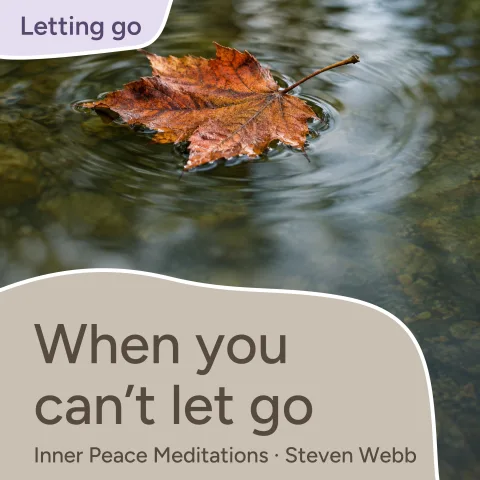
Meditation 78 · 6 July 2025 · 10:50

The Freedom of Forgiveness: Letting Go For Yourself

Forgiveness is not for them. You do it to stop drinking the poison and waiting for someone else to feel ill.

Subject: Letting Go & Acceptance

Apple Podcasts Spotify

Inner Peace Meditations · Meditation 78

Length10:50
SubjectLetting Go & Acceptance
Best timeWhen you are still carrying something somebody did
PositionSitting or lying down
StyleA short talk, then a guided practice, two sets of lines. Music underneath

Forgiveness is not for them. You do it to stop drinking the poison and waiting for someone else to feel ill.

About 11 minutes with Steven Webb's calm voice.

In Zen there is mushin, no mind. Not empty, just roomy enough that things can arrive and leave again. You bring one person or one event, say plainly that it happened and it hurt, then ask what it taught you. I do not believe in forgive and forget. I do not think it is possible. You never have to tell them. It is not about them.

Treat me to a coffee, keep the podcast free, and get my Weekly Calm every Sunday. It is all on stevenwebb.uk

Thank you for sitting with me.

Steven

Who this is for

Forgiveness is not for them. You do it to stop drinking the poison and waiting for somebody else to feel ill.

This one is not about excusing anything and it is not about forgetting. I do not believe in forgive and forget, and I do not think it is possible.

What happens in this meditation

A short talk first, about a Zen idea called mushin, no mind. Not empty in a hollow sense. Roomy enough that things can arrive and leave again.

Then you bring one person or one event to mind. Not necessarily the biggest one you own.

You acknowledge what it stirs, and say three things plainly. Yes, this happened. Yes, it hurt. Yes, I am still here.

Then one line. I forgive you, not for you, but for me. Then a question. What did this teach me?

It ends on loving kindness, finishing with: may I remember that I am whole even after being hurt.

How to get the most from it

Eleven minutes, and it is not an easy one. Pick something you can actually sit with today.

You are telling the story, not living it again. Alan Watts said you cannot get wet from the word water, and that distinction is worth holding on to while you do this.

Expect to come back to it. This is a journey rather than one sitting, and your subconscious will test you afterwards to see whether you meant it.

Questions people ask

Do I have to tell them?

No, and I never have. It does not need their involvement, or their apology, or even for them to still be alive.

Does forgiving mean it was alright?

No. What they did is what they did. This is about you putting it down, which is a separate question from whether it was acceptable.

What if the resistance is very strong?

Find where it sits in the body and give it room rather than arguing with it. Some things take several goes, and needing several goes is not failing at it.

Listen together

The companion talk

The Stillness in the Storms episode that goes with this meditation.
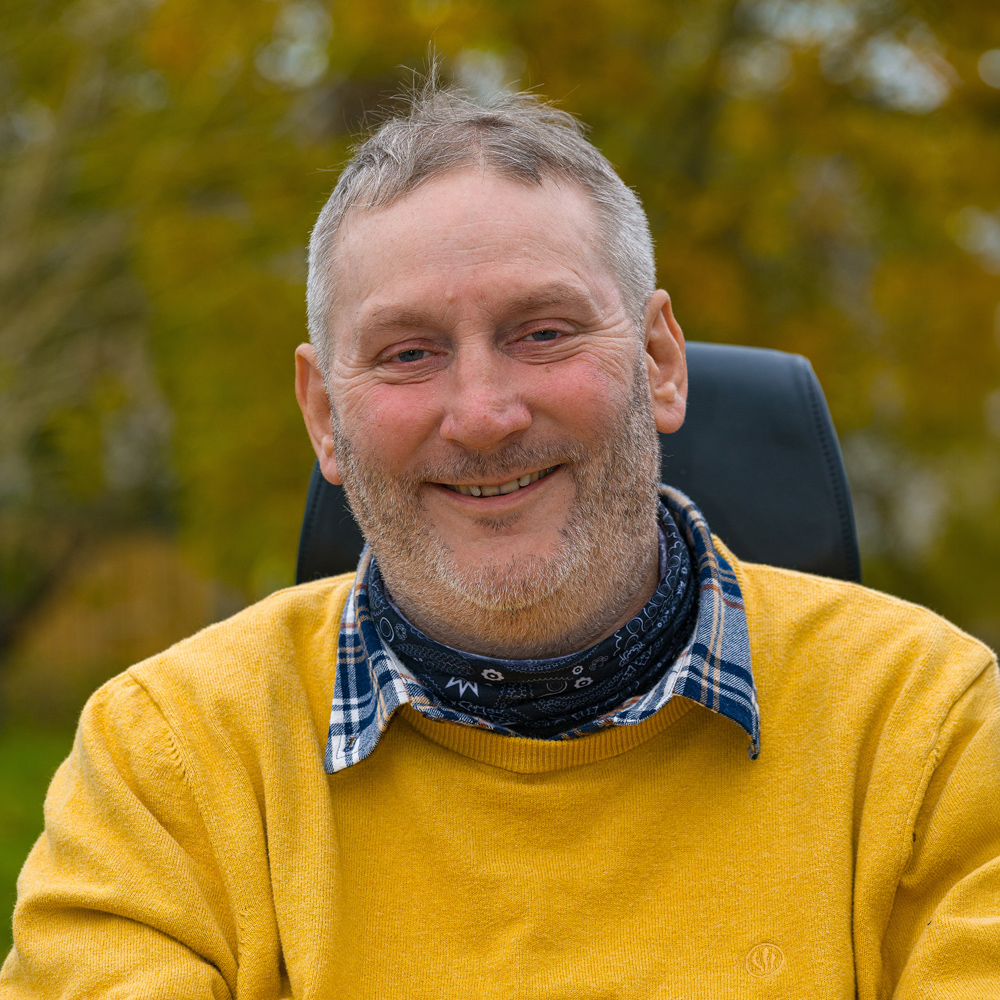
Read along

The transcript

It follows the audio. Press any line to jump there.

forgiveness · letting-go · healing

Read the transcript

So welcome to the freedom of forgiveness, letting go for yourself.

So just while you're settling in, while you're making yourself

comfortable, allowing your body to be what it is, and allow

this moment to be what it is.

This meditation is an invitation to meet the pain of past

hurt with a soft heart.

Not to excuse or forget, but to forgive for your own freedom to

let go.

Not because they deserve it, but because you do so.

Just allow your body to settle into this moment.

Allow your breath to be what it is.

And here's a little bit about forgiveness.

So in Zen, there's a word, mushin, no mind, A state free from

attachment, judgment, and lingering resentment.

It's not emptiness in a hollow sense, but the spaciousness that

allows everything to arise and just as easily pass.

And this practice invites us to touch that quality.

We do not need to carry the weight of what others did.

Systems or whatever it was that was done to us.

People do what they do, shaped by them causes and conditions.

People do what they do shaped by their own causes and conditions.

It might feel personal, but it's not personal.

What happened to you shaped you, yes, but it does not need to

define you.

So we don't forgive to change the past or reconcile with someone

else.

We forgive to stop drinking the poison that we've been holding.

We forgive to reclaim our peace.

We forgive to remember who we are beyond the wound.

So that's a Zen perspective.

How about we do a little practice?

As you relax gently into this moment, breathing in calm, breathing

out.

Relax and just begin with the awareness of breath and feeding the

body just as it is.

And you invite the body to relax and just soften in this moment.

There's no forcing.

The body knows how to relax.

It's just waiting for you to allow it to happen.

You don't need to change your breath.

Your body knows how to breathe in this moment, as it normally does

in all other moments.

And in a moment, I'm going to ask you to bring to mind an event

or a person that still hold some weight.

Then just take a few moments just to decide what event or what

person you want to bring.

It could be something that is really strong.

It could be something that's slightly less stronger.

For now, and remember, you're not there.

Remember that wise quote that says you cannot get wet from the

word water?

We're not re experiencing it, we're just telling the story.

So if you bring that event or the person to your mind now and acknowledge

the feelings it stirs, whether it's pain or anger, whether it's

sadness or fear could be resentment, it could be, could be

just disbelief.

And then if you just speak inwardly, just yes, this happened.

Yes, it hurt and yes, I'm still here.

And just like that, we acknowledge it.

Yes, this happened, yes, it hurt, and yes, I am still here.

And now shift your focus to the healing or your resilience and

your freedom.

And remember we said about forgiveness, it's not about them,

it's totally for you.

So silently repeat just I forgive you, not for you, but for

me.

I forgive you, not for you, but for me.

And you may feel somewhere in your body where this resistance has

really been held and gently allow it space, maybe in your heart,

maybe somewhere lower or even just in your mind.

And you can ask yourself, what did this experience teach me?

What did this experience teach me?

What wisdom can I carry forward?

And just rest here for a moment.

No fixing, not forgetting, just being present with your own

freedom.

I don't believe in all the forgive and forget and I just don't

think it's possible.

I think we can learn from what's happened.

We don't have to reach out to them or whatever it was.

We don't have to even let them know that they're forgiven.

We're doing it from inside of our own heart for ourselves.

And there's a different way of doing the meta loving kindness affirmations

that align with this.

And it goes like this.

May I be free from the burdens of my past.

May I be free from the burdens of my past.

May I live with an open and peaceful heart.

May I live with an open and peaceful heart.

And may I remember that I am whole even after being hurt.

May I remember I am whole even after being hurt.

And then just place your hand on your heart.

May I be well, may I be happy.

May I be free.

May I be well, May I be happy, May I be free.

And just have a little bit of gratitude for your body and your

mind this moment and recognize that this is a journey, it's not

a one off.

You might have to do this meditation a few times.

And remember it's not about them.

It's totally about you and your life and your freedom.

It's now time for you to live the life that you want on your terms.

So let's bring your awareness back to the room.

5.

4.

Gently open your eyes.

3.

Move your arms to just look around the room.

1.

And just maybe take a little bit of a deep breath and just feel

the relief.

Feel the difference between harboring it and thinking about it

and just the freedom that can come from do you know what?

It's not going to bother me anymore and it will come and go but

the more you tell your subconscious mind, the more you tell

your body, do you know what?

I'm done.

I'm okay, I'm here.

I've got a life.

I've got a life to get on with.

The more the subconscious mind, the more the thing will go,

okay, I'll move on with you and you'll have this wonderful freedom

from it.

Meditations like this aren't easy.

Thank you for doing it, thank you for your work and good luck and

I wish you all the freedom.

I'm Stephen Webb and thank you for your support on these guided

meditations.

I put them up free for everybody listening with no adverts

and if you can support me in some way, be amazing.

There's different ways of doing it and following me on.

StephenWeb.uk thank you.

Weekly Calm

One calm email.
Every Sunday.

A little space to pause, a practical thought to take into the week, and a reminder that you’re not doing this alone.

Join and I will send you my book, 5 Simple Practices for Inner Peace. Free, and yours to keep.